
The Quiet Race to Govern AI: Top Platforms Defining the Next Era of Responsible Intelligence
It’s no longer about who builds the smartest model.
It’s about who keeps it under control.
In the last two years, I’ve watched the world’s AI ambitions collide head-on with its anxieties. Regulators are finally awake. The European Union’s AI Act has turned into a global benchmark. The U.S. is splintering into state-level frameworks. And Asia, led by Singapore, is setting new standards in sector-specific governance.
Suddenly, “AI governance” isn’t a buzzword—it’s survival.
Enterprises are scrambling to prove they can innovate responsibly before a regulator, or worse, the public, calls them out.
Let’s look at ten platforms quietly shaping this new era—where innovation meets accountability.
10. C3 AI Agentic AI Platform — Precision Over Hype
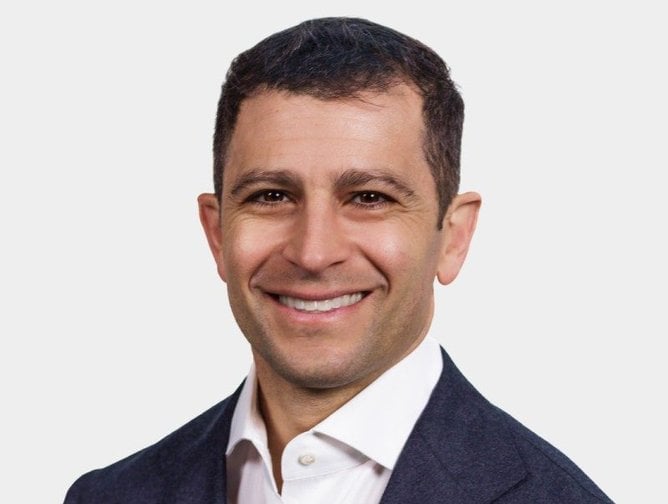
Company: C3 AI
CEO: Stephen Ehikian
Speciality: Enterprise AI application development focusing on Gen and agentic AI for high-value uses
C3 AI doesn’t play in experimental sandboxes. Its work shows up in defense systems, oil rigs, and financial transactions—the kind of places where failure isn’t just embarrassing; it’s catastrophic.
Their platform embeds explainability and accuracy controls deep in the workflow. It’s less about chasing trends and more about not getting it wrong. In industries where a glitch can trigger investigations, C3 AI’s governance-first design is what separates operational confidence from risk exposure.
9. SAS Viya Agentic AI Framework — Automating the Watchdog

Company: SAS
CEO: James Goodnight
Speciality: Integrated governance and analytics, featuring agentic AI frameworks and autonomous policy control
SAS sees analytics and governance as inseparable. The Viya platform automatically identifies sensitive data, wraps it in protection, and keeps the audit trail intact.
But here’s the twist: SAS is moving toward autonomous governance. It uses machine learning to adjust policies in real time as laws and risks evolve. Governance that learns as it works—like an algorithm that watches over other algorithms.
8. ServiceNow AI Control Tower — Governance, But Familiar

Company: ServiceNow
CEO: Bill McDermott
Speciality: Centralised hub connecting strategy, governance, management and performance for enterprise AI
ServiceNow built its Control Tower on something companies already use—its IT and service management backbone.
Instead of forcing new tools into the stack, it turns existing workflows into governance dashboards. For teams already buried in GRC and ticketing systems, that’s a relief. The Control Tower tracks AI agents, monitors risk, and documents every decision. It’s pragmatic governance: no new platform chaos, just extending what works.
7. SAP Joule — One Door for Every AI Interaction

Company: SAP
CEO: Christian Klein
Speciality: AI agent platform serving as the governance ’front door’ to integrated enterprise systems and data
SAP Joule is less a product and more a gatekeeper. It’s the single “front door” for AI interactions across the vast SAP ecosystem.
Rather than scattering controls across countless systems, Joule pulls them together—applying SAP’s Global AI Ethics Policy to every transaction, chat, and data pull. For companies already living inside SAP’s infrastructure, this means full visibility without reinventing their governance architecture.
It’s an elegant answer to a messy problem: how do you govern AI across forty different engines?
6. Salesforce Responsible AI — Trust at the Core
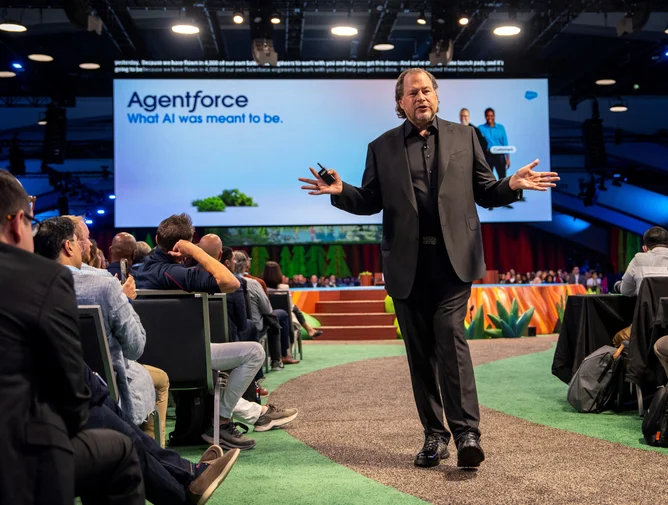
Company: Salesforce
CEO: Marc Benioff
Speciality: Trust-focused AI embedded directly into the CRM, prioritising fairness, security and consent
Salesforce took a different path—it built governance into the CRM itself. Every AI decision, recommendation, or personalization lives inside the same security and compliance boundaries as customer data.
That’s not just efficient; it’s reputational armor. When bias sneaks into customer interactions, it’s not just a compliance issue—it’s a brand wound. Embedding fairness, consent, and transparency directly where relationships happen makes ethical AI part of the customer experience, not an afterthought.
5. Oracle AI Data Platform — Fixing the Foundation

Company: Oracle
CEO: Clay Magouyrk and Mike Sicilia
Speciality: Unites enterprise data and models with strong controls over privacy and data governance
Oracle’s pitch is almost philosophical: governance begins with data.
Most governance failures, they argue, start when data pipelines and AI toolchains live in isolation. By unifying both layers, Oracle prevents the kind of downstream issues that make headlines.
The trade-off? Commitment. This approach thrives inside Oracle’s ecosystem. But for those already invested, it transforms governance from a defensive burden into a seamless part of data management.
4. Google Vertex AI MLOps Suite — Governance as Engineering
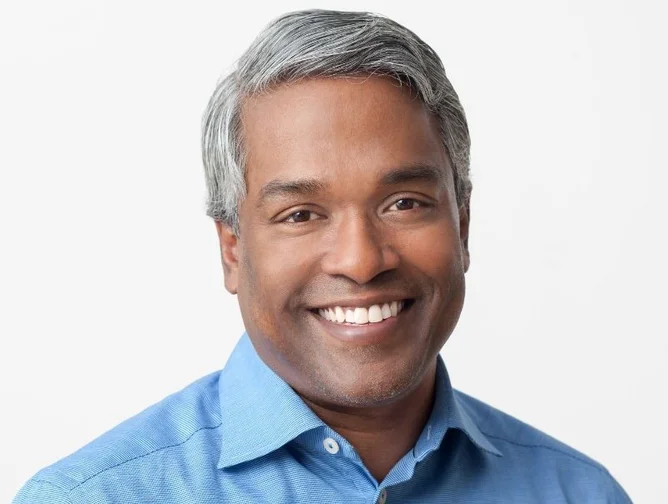
Company: Google
CEO: Thomas Kurian (Google Cloud CEO)
Speciality: Comprehensive MLOps tools for workflow governance, tracking metadata and model monitoring
Google treats AI governance as an engineering problem, not a legal one. Vertex AI’s toolset automates the boring but essential parts—workflow tracking, metadata logging, and model monitoring.
The system logs every parameter, dataset, and environment so auditors don’t have to play detective months later. And when models drift or features degrade, Vertex raises a flag before the damage spreads.
In a world obsessed with shiny models, Google’s reminder is clear: responsible AI is mostly about maintenance.
3. Amazon SageMaker Responsible AI — Prevention, Not Cure

Company: Amazon Web Services (AWS)
CEO: Andy Jassy (Amazon) / Matt Garman (AWS)
Speciality: Scalable MLOps for building, deploying and governing ML with bias and explainability tools
AWS built its responsible AI tools into the development process itself. SageMaker Clarify tests for bias and explainability before deployment, when fixes are still cheap and quick.
Its Model Monitor keeps production systems honest—watching for drift, skew, or unexpected behavior.
AWS even publishes AI Service Cards and runs red-team testing on its own models, a transparency move that regulators appreciate. In practice, SageMaker’s philosophy is simple: governance isn’t about paperwork—it’s about prevention.
2. Microsoft Responsible AI — Built Into the Workflow

Company: Microsoft
CEO: Satya Nadella
Speciality: Integrated toolset for secure, responsible AI development embedded within the Azure ecosystem
Microsoft took a systemic approach. Rather than building a new tool, it rewired its development ecosystem around responsible design.
Azure’s Responsible AI tools integrate into MLOps pipelines and even open-source frameworks. The company created a dedicated Chief Product Officer for Responsible AI—Sarah Bird—to ensure governance is treated as a core engineering discipline, not a PR exercise.
It’s not just compliance with the EU AI Act; it’s architecture for accountability. When even products like Copilot follow these frameworks, we’re witnessing governance at global scale.
1. IBM watsonx.governance — The Cross-Platform Enforcer
Company: IBM
CEO: Arvind Krishna
Speciality: End-to-end, multi-cloud governance with robust global regulatory compliance accelerators
IBM’s watsonx.governance takes a panoramic view. It’s not tied to one ecosystem—it monitors models across AWS, Azure, or any other infrastructure.
It acts as a policy enforcement layer, centralizing control over deployment, compliance, and risk management. And it’s packed with regulatory intelligence from the EU AI Act, NIST, and ISO 42001, saving compliance teams from decoding dense legal text.
What’s impressive is IBM’s foresight: it’s already preparing governance for autonomous AI agents. Because soon, we won’t just be managing models—we’ll be managing systems that manage themselves.
Arvind Krishna, IBM’s CEO, is betting on one truth: the next wave of AI value will come from trust, not power.
Closing Thoughts
AI governance isn’t about slowing innovation. It’s about ensuring it survives its own success.
As governments, companies, and creators like us push deeper into generative and agentic systems, governance becomes less a rulebook and more a compass—a way to stay oriented when automation begins to move faster than intention.
The question isn’t whether you’ll need governance.
It’s whether you’ll have built it in before the storm hits.
If you’re working on AI, data, or design systems that touch human lives—now’s the moment to start that conversation.
About the author : koosha Mostofi

I’m Koosha Mostofi — a multidisciplinary media creator, full-stack developer, and automation engineer, currently based in Tbilisi, Georgia. With more than two decades of professional experience, I’ve been fortunate to work at the crossroads of technology and creativity, delivering real-world solutions that are both visually engaging and technically robust.